
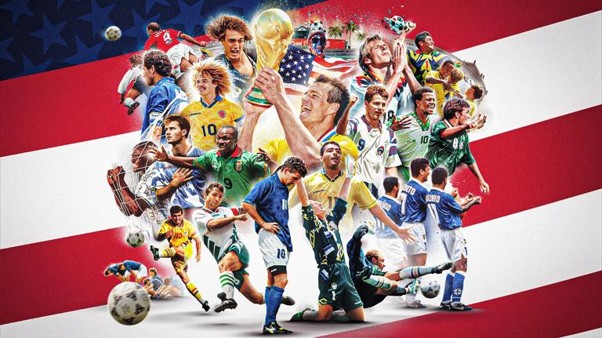
Every four years, the FIFA World Cup produces moments that become immortal. Last-minute winners. Career-defining penalties. Captains lifting trophies beneath a storm of confetti. But behind football’s grandest spectacle lies something far less glamorous: pressure so intense it can dismantle even the world’s best teams from within.
From France’s stunning collapse in 2002, to Italy’s early exit in 2010, Spain’s unraveling in 2014, and Germany’s shock departure in 2018, World Cup history has repeatedly shown that success can quickly become a burden. Once a nation wins football’s ultimate prize, expectation changes shape. Every pass is scrutinized. Every mistake magnified. Every opponent arrives fearless, determined to dethrone the champion.
“People often assume winning builds confidence indefinitely, but elite performance doesn’t work that way,” says Dr. Ryne Sherman, Chief Science Officer at Hogan Assessments and Co-Host of The Science of Personality Podcast. “Past success raises expectations externally and internally. When pressure becomes overwhelming, even highly talented individuals can become cautious, reactive, or emotionally exhausted.”
As conversations around mental health in elite sport continue to grow, Hogan Assessments argues that the World Cup offers one of the clearest examples of how pressure, reputation, and expectation shape performance—not just in football, but in leadership and high-stakes professional environments worldwide.
- When Confidence Turns Into Burden
In football, defending a World Cup title may be one of the hardest tasks in sport. Champions are no longer chasing history—they are trying not to lose it. France arrived at the 2002 tournament as reigning champions and heavy favorites, only to crash out in the group stage without scoring a single goal. Italy followed the same path in 2010. Spain’s golden generation unraveled in 2014. Germany suffered a similarly dramatic collapse in 2018.
“The pattern is no coincidence. At extreme levels of pressure, individuals often stop playing to succeed and start playing not to fail,” explains Dr. Sherman. “That shift fundamentally changes decision-making, confidence, and team dynamics.”
The same phenomenon appears in business. High-performing organizations and executives often struggle after major success because the fear of losing status begins to outweigh the freedom that created success in the first place. Innovation slows. Risk-taking disappears. Confidence becomes caution. In football terms: the shirt suddenly feels heavier.
- Cracks Under Pressure: When Emotion Overrides Control
Few World Cup moments capture psychological overload more vividly than Zinedine Zidane’s red card in the 2006 final. A captain. A global icon. One of the greatest players of his generation. And yet, in the single most important match of his career, composure disappeared in an instant.
“Pressure doesn’t just test talent—it exposes emotional control,” says Dr. Sherman. “Under intense stress, personality tendencies become amplified. Individuals who normally appear calm can become impulsive, reactive, or emotionally overwhelmed when the stakes feel existential.”
Elite athletes are not immune to pressure simply because they are elite. In many cases, they experience it more intensely precisely because expectation, scrutiny, and identity are inseparable from performance. This is why mental toughness is often misunderstood. It is not about suppressing emotion or ignoring stress. It is about maintaining judgment, emotional regulation, and clarity when pressure peaks.
- The Loneliest Walk in Sport
Nothing captures World Cup pressure more brutally than a penalty shootout. The walk toward the spot. The deafening silence wrapped inside 80,000 voices. The goal suddenly looking impossibly small. History balanced on a single strike.
From Brazil’s defining victory over Italy in 1994, to Italy holding their nerve against France in 2006, to the Netherlands facing Argentina in 2022, football history has repeatedly turned on moments measured in seconds.
“Penalty kicks are one of the purest examples of performance psychology,” observes Dr. Sherman. “The technical ability is already there. What determines the outcome is often emotional regulation, confidence, focus, and the ability to manage overwhelming cognitive pressure.”
In high-pressure workplaces, the parallels are striking. Presentations, negotiations, leadership decisions, public failures—many professional moments recreate similar psychological conditions.
The challenge is not whether people are capable. It is whether they can access that capability while under pressure.
- What Real Mental Toughness Actually Looks Like
Contrary to popular belief, mental toughness is not fearlessness. It is the ability to function effectively despite fear, scrutiny, fatigue, and expectation. According to Hogan Assessments, individuals who perform best under sustained pressure often share several characteristics:
- Emotional regulation under stress
- Confidence without overreaction
- Adaptability in uncertain environments
- The ability to recover quickly from setbacks
- Comfort making decisions under scrutiny
“These behaviours don’t eliminate pressure,” explains Dr. Sherman. “But they help individuals avoid becoming consumed by it.” And in environments as emotionally charged as the FIFA World Cup, that difference can define entire tournaments.
Beyond Football: Why the Pressure Conversation Matters
As elite sport continues to confront questions around burnout, emotional strain, and mental health, the World Cup has become more than a sporting event—it is a global case study in human performance under extreme expectation.
The lesson extends far beyond football. Whether in sport, business, or leadership, the highest performers are not necessarily those with the greatest talent. Often, they are the ones best equipped psychologically to carry the weight that comes with expectation.