
Written by Martin Banks
Parliamentarians have been told that “tens of thousands” of overseas citizens were unable to vote at last summer’s UK General Election.
British MPs and peers were presented with the results of a survey showing that more than half of overseas voters did not receive their postal ballot in time to be able to return it in time for their vote to be counted.
On 15 January, representatives of Britons in Spain, Italy, and across the world were present at a meeting at the House of Commons in London to share the frustrations, which many Britons abroad say they felt in “waiting for a ballot that never arrived” or in trying to get their vote delivered to the UK in time.
Last July’s General Election was the first in which all adult Britons abroad, who have ever lived in the UK, were eligible to vote following the abolition of the so-called ‘15-year rule’.
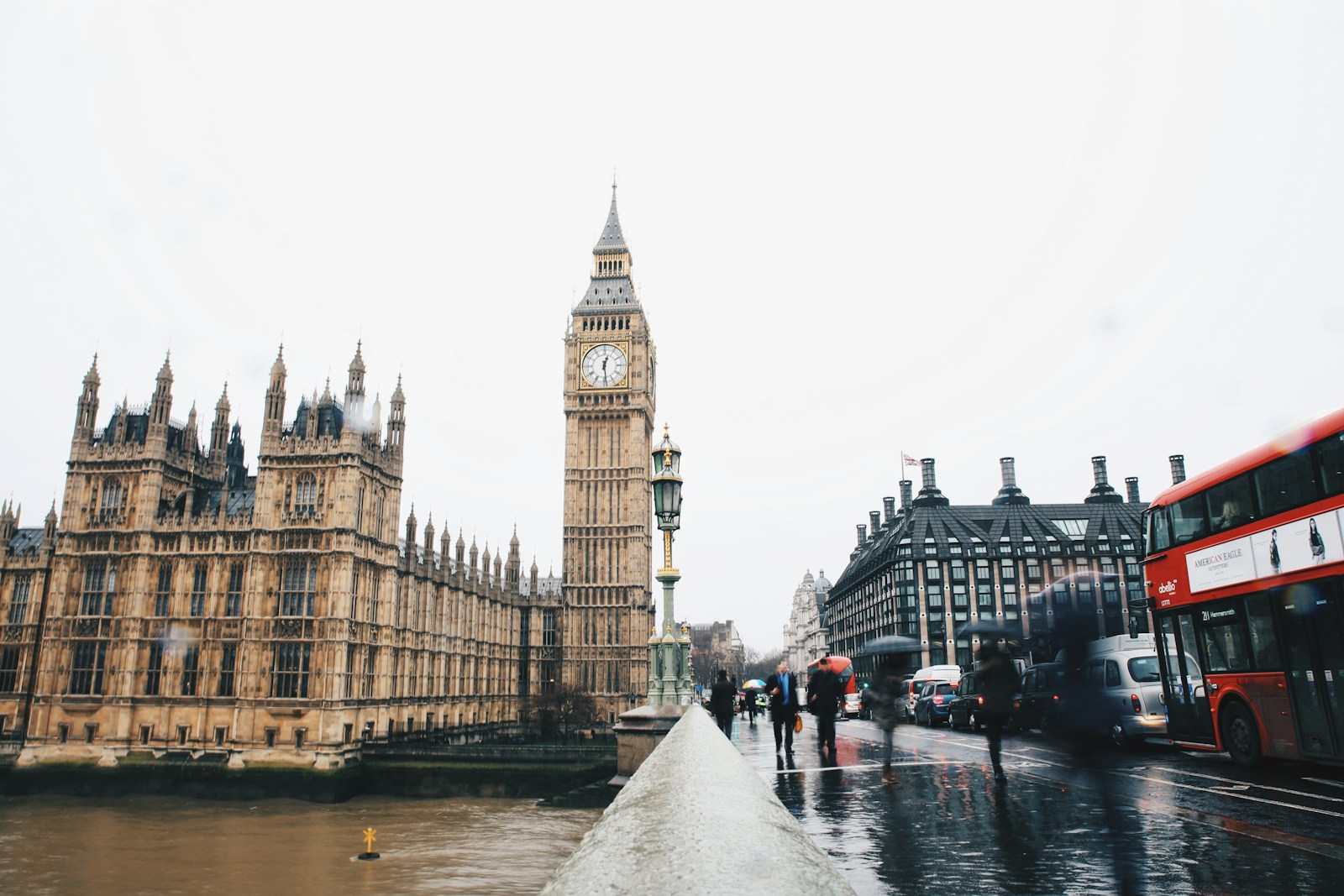
The meeting on Wednesday coincided with the launch of the All-Party Parliamentary Group (APPG) on Citizens’ Rights and took take place in one of the meeting rooms off Westminster Hall, where the late Queen Elizabeth II lay in state.
The APPG looks at issues facing EU citizens in the UK and Britons abroad.
The meeting was hosted by UK Liberal Democrat MP Manuela Perteghella, who is set to be elected as Chair of the APPG. Other parliamentarians to be voted in as officers of the cross-party APPG are: Lord Balfe (Conservative), MP James Asser (Labour) and Baroness Goudie (Labour).
Survey presented to Parliament
The citizens’ rights charity New Europeans UK, which holds the secretariat for the APPG, teamed up with the campaign groups Unlock Democracy and the British Overseas Voters Forum to conduct a survey during last summer’s General Election on how well the postal vote system performed.
Tom Brake, director of Unlock Democracy and former Liberal Democrat MP, presented the findings of the survey at parliament, along with recommendations for improving the system.
Brake said: “Tens of thousands of overseas citizens’ votes did not count at the last General Election. Their right to vote was effectively revoked because as reports such as ours show, postal systems around the world can’t get their ballots to them and back again in time for their votes to be counted.”
The meeting also heard from Mike Tuffrey, trustee of British Overseas Voters Forum, Sue Wilson MBE, Chair of Bremain in Spain, and Clarissa Killwick, Team member of Brexpats – Hear Our Voice and co-founder of Beyond Brexit – UK Citizens in Italy.
Britons Living & Working Abroad need better representation
Chair of New Europeans UK, Dr Ruvi Ziegler, made the case for the introduction of overseas constituencies in the UK to better represent Britons living and working abroad.
The postal vote survey said that, overall, of all those surveyed, less than half (46%) were able to return their ballot in time for it to have been likely to be counted. Many of those responding to the survey were based in France.
The sample indicated that even in France, where the postal system between the two countries would be expected to work efficiently, just over half (55%) received their ballot paper in time to be able to fill it in and return it in time for it to have been likely for it to have been counted.
For the rest of the world, it was only 37% of those who responded, who are likely to have got their vote to the UK in time to be counted.
Nearly 300 (280) Britons abroad responded to the survey – with about half of them living in France.
The findings are anecdotal but the campaign groups say that the number of responses received was sufficient to indicate there are “significant” problems for postal vote users, including in European countries where the postal system might be expected to be reliable.
The Electoral Commission recorded the return rate of postal ballots dispatched and their findings were in keeping with the report. The Commission said it does not have comprehensive data on the proportions of postal votes returned.
However, the campaign groups say that its data from a small sample of local authorities “showed some clear patterns.”
In Canada, the share of postal votes that counted was 48%. In Spain, it was 32%, while the odds in France were better at 75%, while for Australia it was as little as 6%, according to the commission.
The total number of overseas voters registered for the 2024 general election was 191,338. This was down from the 234,000 registered to vote in the 2019 general election, according to the Electoral Commission.
The current system is not working
Brake said: “These dismal figures for postal voting and the general poor take-up of overseas postal voting are proof the current system is not working.
“One voter based in Spain told us they applied for a postal vote on 28 March 2024, but only received it on the 17th July – almost two weeks after polls closed.
“Another, living in Canada, received their ballot on 5July – the day after the election. Farcical stories. But by no means exceptional.”
Some respondents travelled to the UK instead of relying on the UK and their respective countries’ postal systems.
Others, at “significant” personal cost, relied on courier companies to get their votes to the UK in time. Some voted by proxy but the groups say that when you have lived abroad for many years, finding a trustworthy proxy can be difficult.
Some possible solutions have been suggested and British Overseas Voters Forum (BOVF), Unlock Democracy and New Europeans UK, who all joined forces for our survey, recommend that the UK government consider the following as ways of improving the reliability of postal voting for overseas voters:
- Extending the election period would only bring about minimal improvements. The report says that, even when overseas voters applied well in advance of the deadline, postal ballots arrived far too late – or in some instances not at all.
- A better option, backed by the Electoral Commission, would be to copy the practice of many other countries and allow British overseas citizens to vote in person at UK Embassies or High Commissions. This, it is argued, would allow UK citizens abroad to fill in their ballot papers, dispatched from the UK in the diplomatic mail bag, at the UK Embassy or High Commission in their country of residence. The ballot papers would then be returned via the diplomatic mail bag.
“This assumes that the diplomatic mail bag is quicker than using the UK’s and country of residence’s postal systems to get overseas voters’ ballot papers to voters and back into the UK,” says New Europeans.
- Electronic voting, providing that security requirements can be met, would be a “game changer.”
Such systems are already used by many US states and New Zealand voters overseas and the groups said this would have the biggest impact, “making voting quick and easy – boosting turnout – and ensuring that votes cast count.”
The case for overseas constituencies
Improvements to voting could, it is also argued, be combined with the introduction of overseas constituencies, a model some countries of a not dissimilar size to the UK have adopted, such as France and Italy.
Chair of New Europeans, Dr Ruvi Ziegler, said: “In our constituency-based electoral system, overseas constituents’ voices are substantively muted by a weak system of representation in Westminster. They are represented by the MP in an area they may have left decades ago. These MPs are likely to have had little experience of dealing with case works concerning citizens abroad. Their concerns are, by definition, dwarfed by those of most constituents who live in the territorial jurisdiction.”
About the author
Martin Banks is our international news correspondent and lives in Belgium. A very experienced journalist covering UK and international news, sport and politics for more than 44 years, Martin gives a unique perspective on EU issues.